Revelation Revealed

by Christine Miller | Nothing New Press

  • Book Extras Home
  • Table of Contents
    • Introduction
      • Design of Revelation
    • The Things Which Are
      • Revelation 1
      • Revelation 2-3
      • Revelation 4-5
    • Seals Opened
      • Revelation 6
      • Revelation 7
    • Trumpets Blown
      • Revelation 8
      • Revelation 9
      • Revelation 10
      • Revelation 11
    • Identities Revealed
      • Revelation 12
      • Revelation 13
      • Revelation 14
    • Bowls Poured out
      • Revelation 15
      • Revelation 16
      • Revelation 17
      • Revelation 18
    • Return of the King
      • Revelation 19
      • Revelation 20
      • Revelation 21
      • Revelation 22
    • Appendices
      • Teaching Tools
      • Precedent of Daniel
      • Marked on Hand…
      • Chiastic Structure
      • Outline of History
      • FAQs
      • Bibliography
  • About the Author
  • Buy the Book
You are here: Home / Archives for Christine Miller

The Synagogue of Satan

August 22, 2016 by Christine Miller Leave a Comment

I am not sure anyone knows what Jesus was referring to when He condemned those who say they are Jews but are not, instead being of the synagogue of Satan. (The Letters to the Seven Churches, pg. 12).

“Say they are Jews, and are not—Jews by national descent, but not spiritually of ‘the true circumcision.’”

Jamieson, Faussett, and Brown’s Commentary on Revelation 2:9.

I am constantly on guard for anti-Semitism, especially in the old histories and commentaries, in the discussion of this verse. Any member of any group, no matter what they profess with their mouths, can be in ‘the service of Satan,’ to quote Barnes. That does not mean that all members of that group are so.

“The reference to tribulation and to the false Jews brings to the modern reader the picture of the later martyrdom of Polycarp at Smyrna, in which the Jews played such a zealous part as to break the Sabbath by bringing fagots into the stadium to light his fire.”

LeRoy Froom, The Prophetic Faith of Our Fathers, Vol. 1, p. 92.

“‘But are the synagogue of Satan.’ Deserve rather to be called the synagogue of Satan. The synagogue was a Jewish place of worship … but the word originally denoted the assembly or congregation. The meaning here is plain, that though they worshipped in a synagogue, and professed to be the worshippers of God, yet they were not worthy of the name, and deserved rather to be regarded as in the service of Satan.”

Albert Barnes, Notes on … Revelation, p. 71.

“The authority of Emperors, Kings, and Princes, is human. The authority of Councils, Synods, Bishops, and Presbyters, is human. The authority of the Prophets is divine, and comprehends the sum of religion, reckoning Moses and the Apostles among the Prophets; and if an Angel from Heaven preach any other gospel, than what they have delivered, let him be accursed. Their writings contain the covenant between God and his people, with instructions for keeping this covenant; instances of God’s judgments upon them that break it: and predictions of things to come. While the people of God keep the covenant, they continue to be his people: when they break it they cease to be his people or church, and become the Synagogue of Satan, who say they are Jews and are not. And no power on earth is authorized to alter this covenant.”

Isaac Newton, Observations upon the Prophecies of Daniel, and the Apocalypse of St. John, Chapter 1, published 1733 (bold emphasis only added).
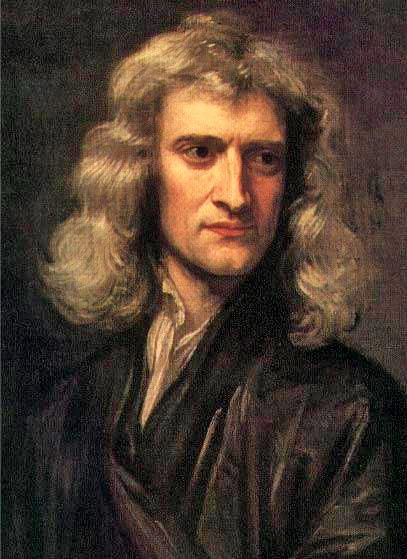
Sir Isaac Newton | Portrait by Sir Godfrey Kneller, 1689 | revelationrevealed.online
Sir Isaac Newton | Portrait by Sir Godfrey Kneller, 1689 | Institute for Mathematical Sciences, University of Cambridge. Courtesy of Wikimedia Commons.

I must here mention that there is also a theory I have encountered which equates the synagogue of Satan with synagogues of the Samaritans, and while I searched for a reference presenting this idea that I could mention here, the ones I found did not meet a basic standard of scholarship. That does not mean it may not be a meritorious idea, just that referencing it as such will have to wait.
Revelation 6 Endnotes

August 22, 2016 by Christine Miller Leave a Comment

There are literally hundreds of endnotes for the Revelation 6 chapters. Rather than try to fit them all here, they are organized according to the same chapter divisions as the text.

Revelation 6:1-8 Endnotes
Revelation 6:9-11 Endnotes
Revelation 6:12-17 Endnotes

The Five Good Emperors of the First Seal

August 22, 2016 by Christine Miller Leave a Comment

Historically the church understood that the first seal, the white horse of righteousness, with a rider exercising military might and ruling authority, who went out to conquer, and who did increase politically and territorially, was fulfilled from 96-180 ad by the five righteous emperors of Rome. (The First Four Seals: 96-300 AD, pg. 24.)

For the Scriptural interpretation of the colors and symbols of the first four seals, as traditionally understood by the church, there is no better source than Albert Barnes, who employs minute detail in his explanation of each symbol, in Notes on the New Testament … : Revelation, pp. 132-158.

“The wicked Domitian was succeeded by Nerva, a good, wise, and generous old man, who did all he could to repair the wrong which Domitian had done, and to induce the Romans to lead better lives.”

H. A. Guerber, The Story of the Romans, pg. 239.

“Such was the respect that the Romans felt for Trajan that during the next two hundred years the senators always addressed a new emperor by saying: ‘Reign fortunately as Augustus, virtuously as Trajan!’ Thus, you see, the memory of a man’s good deeds is very lasting; even now Trajan’s name is honored, and people still praise him for the good he did while he was emperor of Rome.”

H. A. Guerber, The Story of the Romans, pg. 242.

“Trajan was succeeded by his cousin Hadrian, a good and true man … and his next [act as emperor was] to pardon all who had ever injured him. Thus, we are told that on meeting an enemy he said: ‘My good friend, you have escaped, for I am made emperor.’

“Hadrian was very affable, and always ready to serve others. When asked why he, an emperor, troubled himself thus about others, he replied: ‘I have been made emperor for the benefit of mankind and not for my own good.'”

H. A. Guerber, The Story of the Romans, pg. 243.

“[Trajan] is the second of the Five Good Emperors, the first being Nerva.”

“Ancient Rome,” Wikipedia.

“Nevertheless, the ability and enlightened statesmanship of Marcus Aurelius are undoubted. Indeed, they were only equaled by the purity and beauty of his personal life. He regarded his exalted office as a sacred trust to which he must be true, in spite of the fact that he would have greatly preferred to devote himself to reading, study, and philosophy, which he deeply loved. … he found time to record his thoughts and leave to the world a little volume of meditations written in Greek. As the aspirations of a gentle and chivalrous heart toward pure and noble living, these meditations are among the most precious legacies of the past. Marcus Aurelius was the last of a noble succession, the finest spirit among all the Roman emperors, and there was never another like him on the imperial throne.”

James Breasted, Ancient Times: A History of the Early World, p. 665.

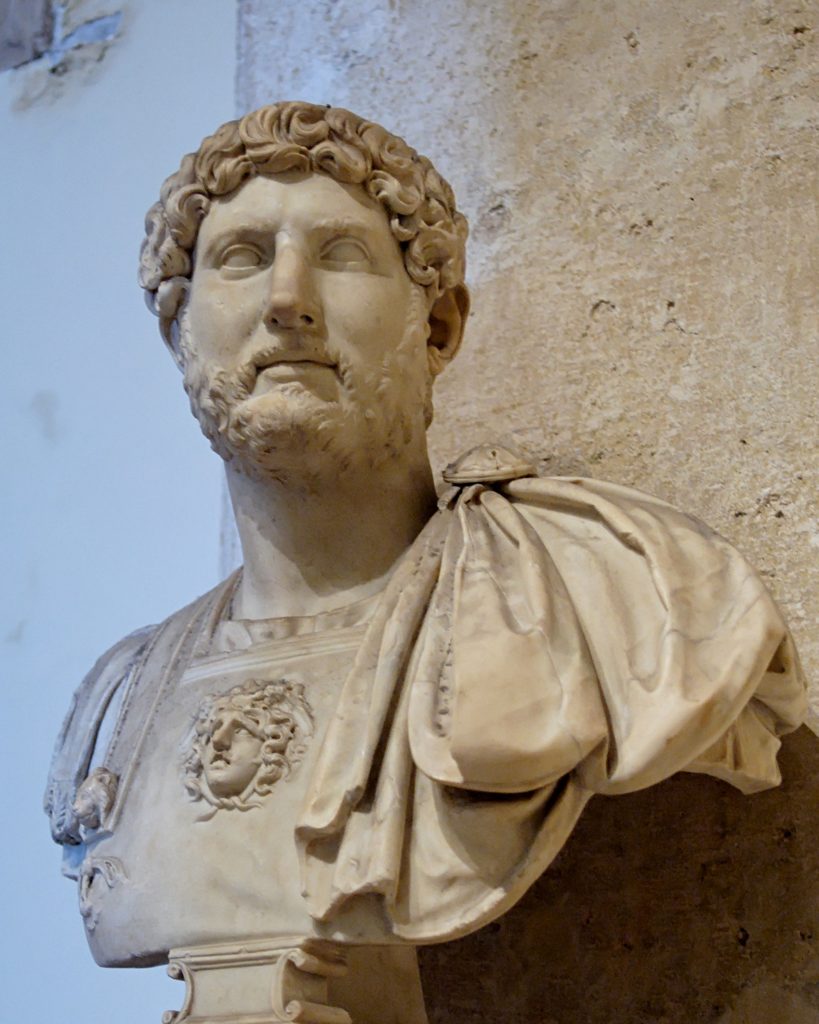
Hadrian, Marble Bust, Capitoline Museums, Rome | revelationrevealed.online
Marble bust of Hadrian | Capitoline Museums, Rome | Courtesy of Wikimedia Commons.

Establishing the Timeline of the First Seal

August 22, 2016 by Christine Miller Leave a Comment

The Christian persecution for which John was in exile, began in 95 AD and Domitian was assassinated in 96 AD. (The First Four Seals: 96-300 AD, pg. 23).

See Persecutions under Domitian, from the Introduction Endnotes.

This period of righteous rule and the Pax Romana (Peace of Rome) lasted from 96 AD to 180 AD. (The First Four Seaks: 96-300 AD, pp. 23-24).

“If a man were called to fix the period in the history of the world, during which the condition of the human race was most happy and prosperous, he would, without hesitation, name that which elapsed from the death of Domitian to the accession of Commodus. The vast extent of the Roman empire was governed by absolute power, under the guidance of virtue and wisdom. The armies were restrained by the firm but gentle hand of four successive emperors, whose characters and authority commanded involuntary respect. The forms of the civil administration were carefully preserved by Nerva, Trajan, Hadrian, and the Antonines, who delighted in the image of liberty, and were pleased with considering themselves as the accountable ministers of the laws. Such princes deserved the honor of restoring the republic, had the Romans of their days been capable of enjoying a rational freedom.”

Edward Gibbon, The History of the Decline and Fall of the Roman Empire, Vol. 1, Ch. 3, “The Constitution in the Age of the Antonines, Pt. II.”

The death of Domitian occurred in 96, and Commodus was the son and successor of Marcus Aurelius. Aurelius’ reign ended in 180 with his death, and Commodus’ begun immediately after. Gibbon curiously says the peace lasted through four successive emperors, and names the four as Nerva, Trajan, Hadrian, and the Antonines. The Antonines, however, were two: Antoninus Pius, and Marcus Aurelius, which brings the total of the good emperors, to five.

See also The Five Good Emperors, from The First Four Seals Endnotes.

Absolute Control of the Roman Church

August 21, 2016 by Christine Miller Leave a Comment

During the days of this beast’s power, i.e., the Roman Church exercising temporal power in conjunction with the Holy Roman Empire, that is exactly what happened. In Europe during the Middle Ages, the days of the power of the Holy Roman Empire and the Roman Church, every person who was born was born into the Roman Church. … They did what the Church instructed them to do, and thought as the Church taught them to think. No other authority existed … (Identifying Works: The Mark of His Name, pp. 174, 175).

“The church as a visible organization never had greater power over the minds of men. She controlled all departments of life from the cradle to the grave. She monopolized all the learning, and made sciences and arts tributary to her. … She founded universities, built lofty cathedrals, stirred up the crusades, made and unmade kings, dispensed blessings and curses to whole nations. The medieval hierarchy centering in Rome re-enacted the Jewish theocracy on a more comprehensive scale. It was a carnal anticipation of the millennial reign of Christ. It took centuries to rear up this imposing structure, and centuries to take it down again.”

Philip Schaff, History of the Christian Church, Vol. 4, pg. 13.

« Previous Page
Next Page »

Search

Newest Notes

  • On the abuse of papal authority
  • Revelation 5 Chiastic Structure
  • Revelation 4 Chiastic Structure

Table of Contents

  • Introduction
  • The Design of Revelation
  • Revelation 1
  • Revelation 2-3
  • Revelation 4-5
  • Revelation 6
  • Revelation 7
  • Revelation 8
  • Revelation 9
  • Revelation 10
  • Revelation 11
  • Revelation 12
  • Revelation 13
  • Revelation 14
  • Revelation 15
  • Revelation 16
  • Revelation 17
  • Revelation 18
  • Revelation 19
  • Revelation 20
  • Revelation 21
  • Revelation 22
  • Appendices
  • Bibliography

Get updates on new posts:

Click here to subscribe to email updates.

Join the discussion:


Join the official discussion page here.

Notice

THE FACTS AND DATES of these events, not specifically annotated, were all checked for accuracy with the Encyclopaedia Britannica: Eleventh Edition (New York City: Cambridge England University Press, 1910).

ALL RIGHTS RESERVED. This website is protected under United States and International copyright law. No portion of this website may be reproduced, stored in a retrieval system, or transmitted in any form or by any means–electronic, mechanical, photocopy, recording, scanning, or other–except for brief quotations in critical reviews or articles, without the prior written permission of the publisher.

SCRIPTURE QUOTATIONS are from the World English Bible (public domain), unless otherwise noted.

Books by Christine

Award-winning histories:
All Through the Ages
Guerber's Histories
The Law of Love

Contact

Nothing New Press
P.O. Box 18335
Sarasota, FL 34276
info@nothingnewpress.com

Hours

Monday ~ Friday
8am-5pm EST
Closed for posted holidays
Visit Nothing New Press

Our Family of Websites: NothingNewPress.com | aLittlePerspective.com | Classical-Homeschooling.org | BiblicalHomeschooling.org

Copyright © 2025 · NothingNewPress · Website by e9designs

Copyright © 2025 · Beautiful Pro Theme on Genesis Framework · WordPress · Log in